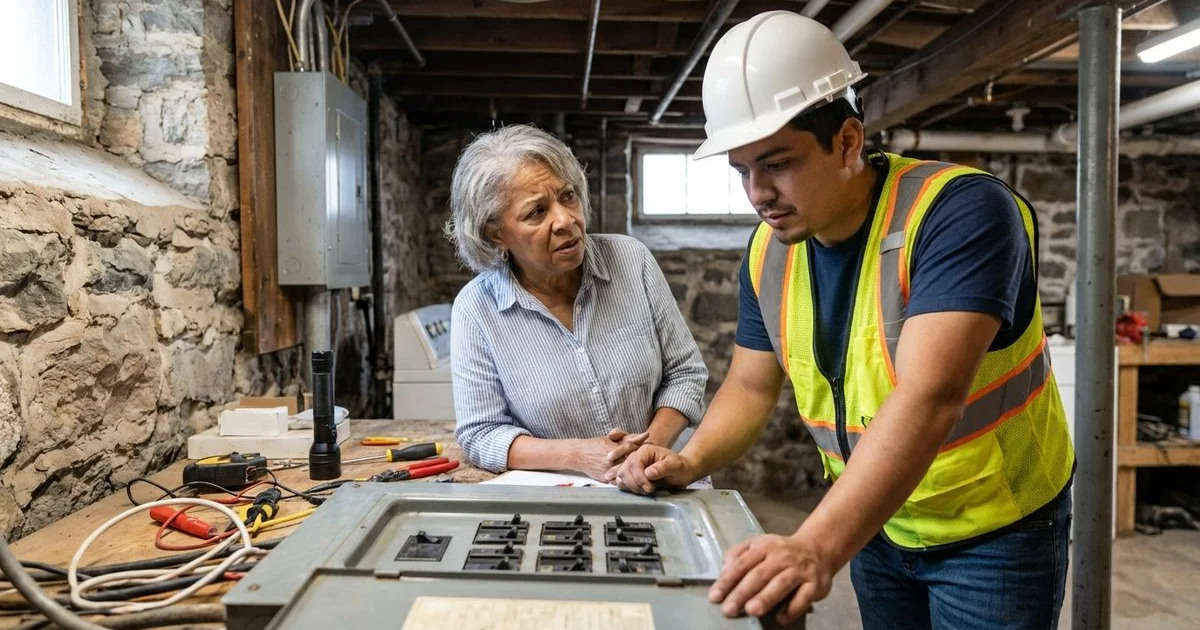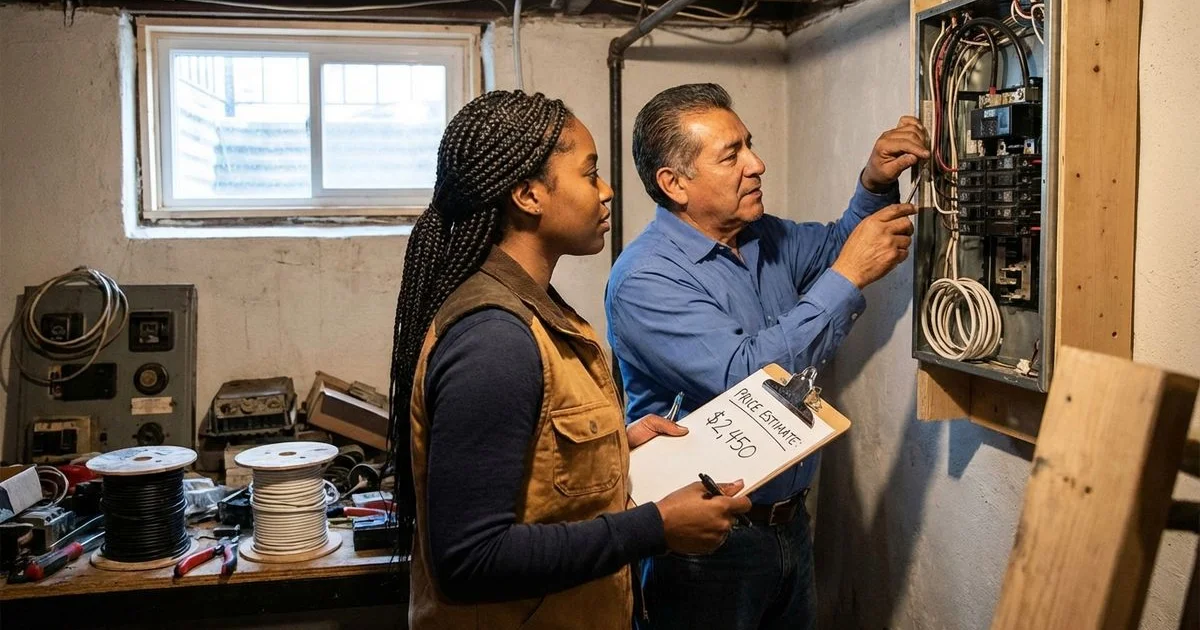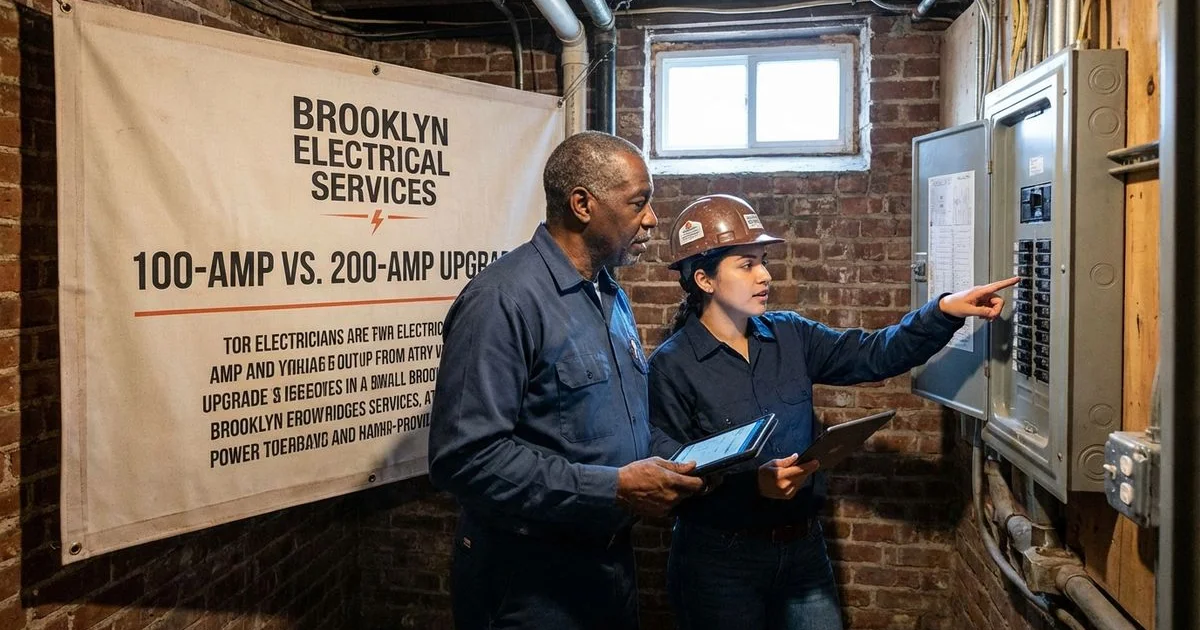
One of the most frequent calls we get from Brooklyn homeowners involves a tripped breaker or flickering lights, followed immediately by a question about capacity. We see this constantly in neighborhoods like Park Slope and Bed-Stuy where modern appliances are being plugged into pre-war infrastructure.
The decision between a 100-amp and 200-amp service isn’t just about technical specs. It is about whether your home can handle the shift from gas to electric that is happening across New York City. Making the right call now saves you from ripping out drywall twice.
Understanding Amperage and What It Means
Amperage measures the volume of electricity flowing into your home. You can think of it like the diameter of a water main coming into your basement. A 100-amp panel is a standard pipe, while a 200-amp panel is a main with double the width.
This capacity defines how many devices can run simultaneously. If you try to pull 150 amps through a 100-amp panel, the main breaker will trip to prevent the wires from melting.
How to Check Your Current Service
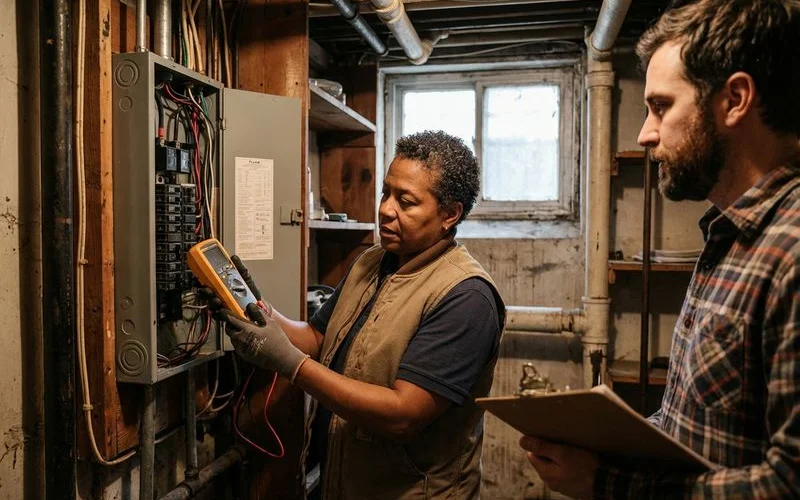
Many homeowners don’t know what they currently have. You can usually find out by looking at your main electrical panel:
- Locate the Main Breaker: This is usually a large double switch at the very top or bottom of the panel.
- Read the Label: The number stamped on the toggle switch handle (e.g., “100”, “150”, or “200”) indicates the total amperage.
- Inspect the Meter: In some older Brooklyn homes, the meter pan outside might be round and small, indicating a 60-amp or older 100-amp service that needs a total overhaul.
When a 100-Amp Panel May Be Sufficient
A 100-amp panel can still work for specific properties, particularly smaller apartments or co-ops where heating is communal. We often see this service size remain adequate if your lifestyle fits a very specific low-demand profile.
Your home might get by on 100 amps if:
- Gas is your primary fuel: You use gas for heating, your dryer, your stove, and your water heater.
- The footprint is small: The living space is under 1,500 square feet.
- Cooling is minimal: You use window AC units rather than a central system.
- No heavy machinery: There are no EV chargers, heated floors, or electric saunas.
Keep in mind that while this works for now, it limits future renovations. A simple kitchen remodel involving an induction stove could push a 100-amp panel over its limit.
When You Need a 200-Amp Panel
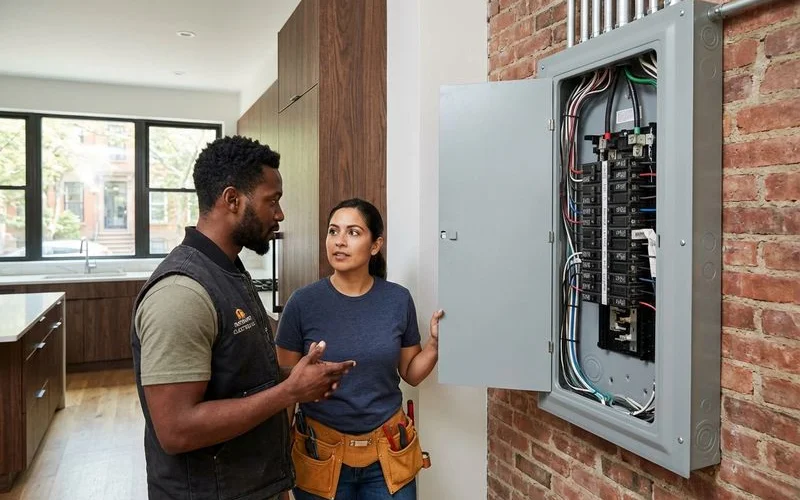
For most single-family homes and brownstones in Brooklyn, 200 amps has become the new baseline. Modern amenities draw significantly more power than the appliances of thirty years ago.
You should plan for a 200-amp upgrade if you answer “yes” to any of these scenarios:
- EV Charging: A Level 2 charger (like a Tesla Wall Connector) often requires a dedicated 40 to 60-amp breaker.
- Electrification: You are switching from a gas boiler to electric heat pumps or mini-splits.
- Renovations: You are adding a rental suite or a modern kitchen with double ovens.
- Central Air: A central AC compressor creates a massive surge when it kicks on.
The “All-Electric” Push
New York City codes and Local Law 97 are pushing buildings toward electrification. Even if you don’t fall under strict compliance rules yet, the market is moving away from gas. Installing a 200-amp panel now prepares your property for high-efficiency heat pumps and induction cooking, which are becoming standard in renovated Brooklyn homes.
Calculating Your Home’s Electrical Load
We don’t guess when it comes to capacity. A licensed electrician performs a load calculation based on NEC Article 220 (National Electrical Code) to determine your exact needs.
This calculation involves:
- General Lighting: 3 volt-amperes per square foot.
- Small Appliance Circuits: 1,500 volt-amperes for kitchen and laundry loops.
- Fixed Appliances: The nameplate rating of dryers, ranges, and HVAC units.
- Demand Factors: Applying a percentage reduction because you rarely turn everything on at once.
Typical Wattage Requirements
Here is a look at what modern appliances actually pull from your grid:
| Appliance | Estimated Wattage | Required Amperage (Approx) |
|---|---|---|
| Central Air Conditioning | 3,500 - 5,000 watts | 15 - 30 amps |
| Electric Clothes Dryer | 2,000 - 6,000 watts | 30 amps |
| Electric Oven/Range | 3,000 - 5,000 watts | 40 - 50 amps |
| Level 2 EV Charger | 7,000 - 11,500 watts | 40 - 60 amps |
| Electric Water Heater | 4,000 - 5,500 watts | 30 amps |
Cost Differences Between 100-Amp and 200-Amp Panels
The price gap between the two options is surprisingly narrow because the labor is nearly identical. Our teams have to perform the same permitting, demolition, grounding, and coordination with Con Edison regardless of the amperage.
Estimated 2026 Price Ranges for Brooklyn:
- 100-Amp Panel Swap: $1,800 - $3,000 (Mostly for replacing a dangerous panel without upgrading the service line).
- 200-Amp Service Upgrade: $3,500 - $6,500 (Includes new meter pan, service entrance cable, grounding, and panel).
Where the Extra Money Goes
The higher cost for 200 amps covers the heavier copper or aluminum service entrance cable and a larger meter pan. Since you are already paying for the electrician’s time and the NYC Department of Buildings (DOB) permit fees, paying the small premium for 200 amps offers much better long-term value.
Brooklyn-Specific Considerations
Working on electrical systems in Brooklyn involves unique challenges you won’t find in the suburbs. We navigate a specific set of hurdles depending on your building type.
The “Brownstone” Riser Issue
Many multi-family conversions share a single service riser. If you are in a co-op or condo, upgrading your unit to 200 amps might require upgrading the building’s main line from the street, which is a significant project involving all owners.
Con Edison “Spot Checks”
Con Edison has strict requirements for meter placement. When we upgrade a service, we often have to move the meter from inside the basement to the exterior of the building to meet current standards.
Landmark Preservation Commission (LPC)
If your home is in a historic district like Brooklyn Heights or Cobble Hill, we cannot simply bolt a conduit to the front facade. We must apply for LPC permits and often route wiring through the interior or paint conduits to match the brickwork exactly.
Old Wiring Hazards
- Cloth-Insulated Wiring: Common in homes built before 1950, this wiring becomes brittle and dangerous.
- Aluminum Wiring: Found in 1960s-70s renos, this requires special connectors to prevent fires.
- No Grounding: Many pre-war homes lack a proper ground to the water main, which we must install during an upgrade.
Future-Proofing Your Electrical System
Technology is moving faster than construction standards. A 200-amp panel is an investment in the resale value and functionality of your home for the next 30 years.
Consider these upcoming trends:
- Vehicle-to-Home (V2H) Charging: Future EVs will be able to power your home during a blackout, but this requires a robust panel and specialized transfer switches.
- Battery Storage: Systems like the Tesla Powerwall are becoming popular in NYC for backup power and peak shaving.
- Smart Panels: New panels from brands like SPAN allow you to control individual circuits from your phone, but they require the capacity to handle the hardware.
Making the Right Decision
A 200-amp panel is the standard choice for the vast majority of Brooklyn homeowners. It handles the heavy load of modern HVAC systems and electric vehicles while providing a safety margin for technologies we haven’t even seen yet.
The small savings of sticking with 100 amps usually evaporates the moment you want to add a single new heavy-duty appliance.
If you are unsure where your home stands, we can help. Our team specializes in electrical panel upgrades for Brooklyn homes, navigating NYC codes and Con Edison requirements to give you a clear, honest assessment of your power needs. We handle the load calculations, the permits, and the heavy lifting to ensure your lights stay on safely.
Related Service
Learn more about our panel upgrades service