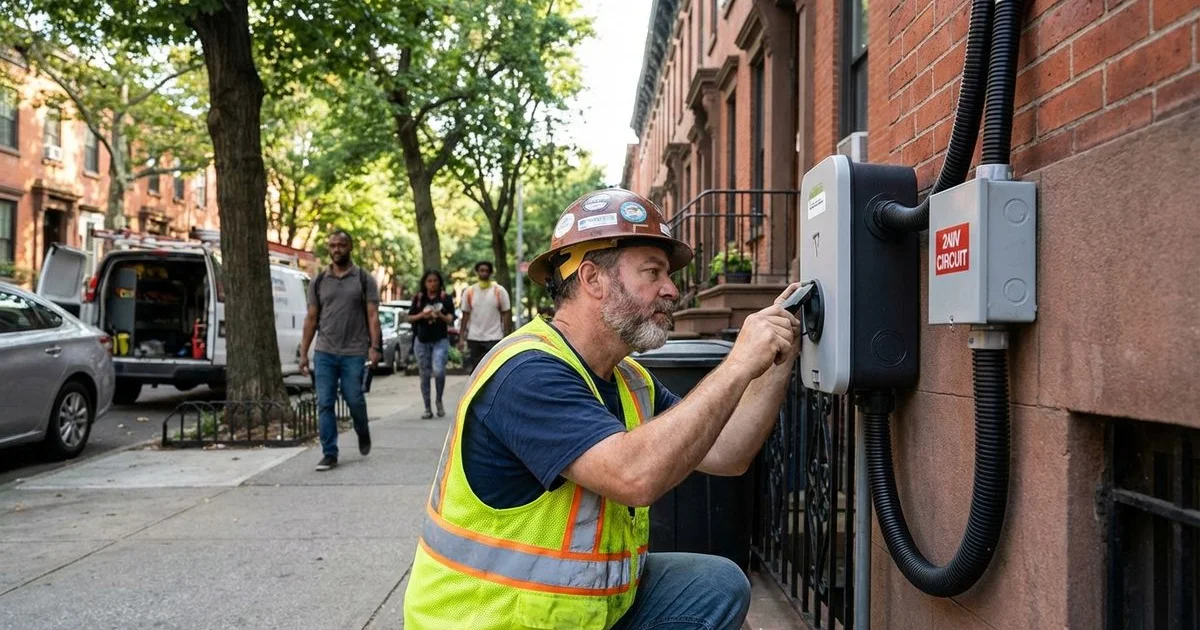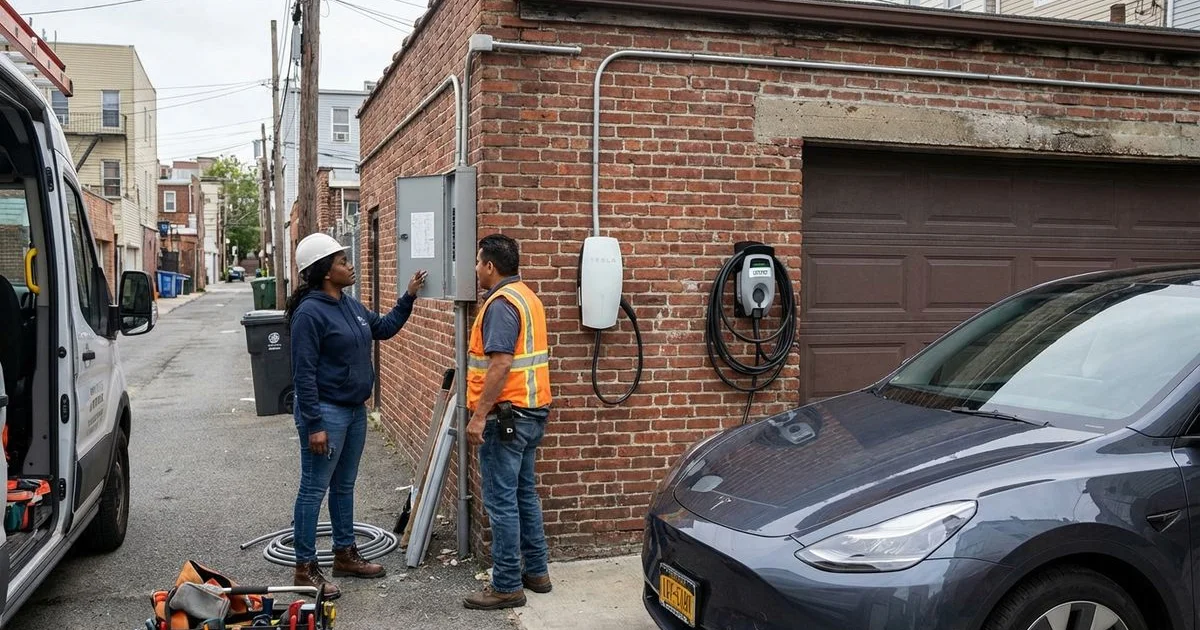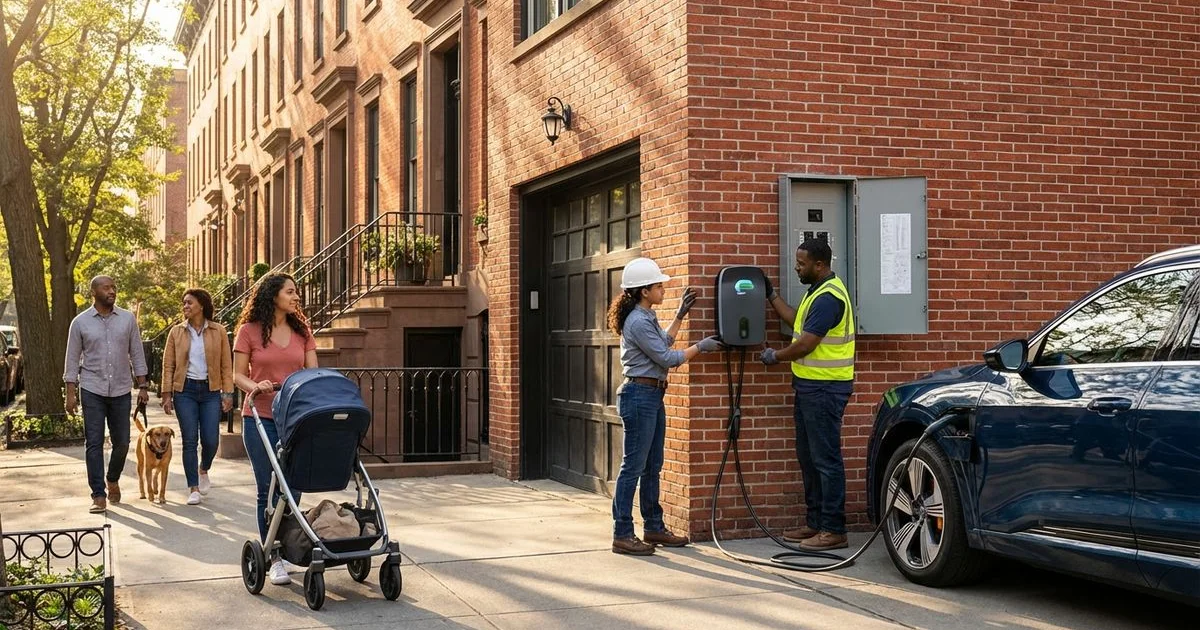
To many Brooklyn homeowners, the excitement of buying an electric vehicle often hits a speed bump right at their own front door.
We find that the single biggest hurdle isn’t finding a car, but figuring out where to plug it in.
Most of our clients in neighborhoods like Park Slope or Bed-Stuy are working with electrical systems designed decades before EVs were even a concept.
This leads to a critical question that affects both your safety and your budget.
Does your current panel have the muscle to handle a Level 2 charger, or are you facing a significant upgrade?
We are going to break down exactly how to check your system’s capacity, what the specific NYC code requires, and the smart alternatives that can save you thousands.
Understanding Your Electrical Panel’s Capacity
Every home relies on a central breaker box to distribute power safely.
We think of this panel as the heart of your home’s electrical system, pumping energy to every outlet and appliance.
Its capacity is measured in amps, which dictates the total electrical load you can run simultaneously without tripping the main breaker.
Here is what we typically see in Brooklyn basements:
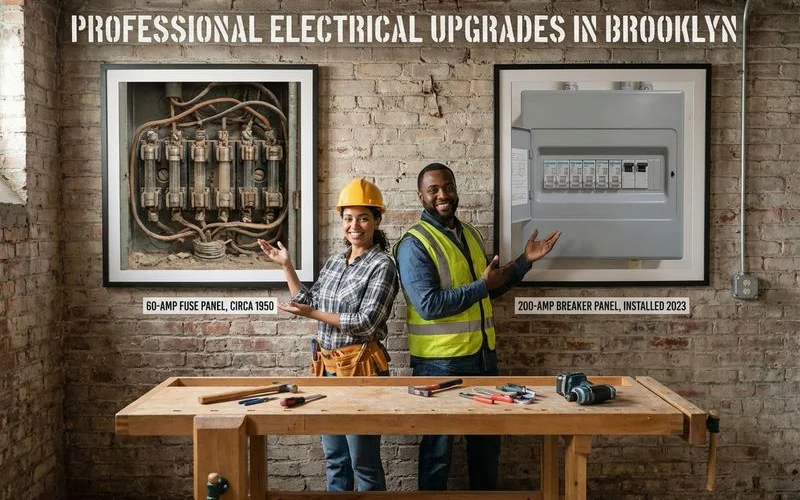
60-amp panels: These relics are still common in pre-war brownstones and homes built before the 1960s. We strongly advise that these are almost never sufficient for modern living, let alone an EV charger. Attempting to add a high-draw appliance to a 60-amp service is a safety hazard that often voids insurance policies.
100-amp panels: This was the standard for construction from the 1960s through the 1990s. We find that a 100-amp panel sits right on the borderline for EV owners. It might work if you have gas appliances, but if you have central air or an electric dryer, you are likely out of room.
150 to 200-amp panels: Modern renovations and new builds almost always include these robust systems. Our team rarely sees capacity issues with 200-amp service, as it provides ample headroom for a 40-amp or 50-amp charger circuit.
Signs Your Panel Needs an Upgrade
Capacity isn’t just about the number printed on the main breaker.
We instruct homeowners to look for specific physical and performance warning signs that suggest an upgrade is overdue.
Here are the red flags that demand immediate attention:
Dangerous Panel Brands: We always check for brands like Federal Pacific Stab-Lok or Zinsco, which were popular in the 1970s but are now known fire risks. These panels often fail to trip during a surge, making them dangerous even without the added load of an EV. Insurance companies in NYC often require their replacement before renewing a policy.
Frequent Breaker Trips: If running the microwave and the air conditioner at the same time trips a breaker, your system is already maxed out. We warn that adding a continuous 40-amp load for an EV charger will make this system unstable.
Fuse Boxes: Some historic Brooklyn homes still rely on glass screw-in fuses. Our electricians cannot legally install a modern EV circuit into a fuse box; a full replacement is mandatory.
Physical Deterioration: Rust on the bottom of the panel, buzzing sounds, or warm breakers are signs of internal failure. We see this often in basements that have experienced past flooding or high humidity.
The Load Calculation: NYC Code Requirements
You cannot simply guess if you have enough power.
We perform a precise load calculation based on the NYC Electrical Code, which has stricter amendments than the standard National Electrical Code (NEC).
This mathematical formula proves whether your home can safely handle the new demand.
The 80% Safety Rule: Electrical code dictates that a continuous load, like an EV charger, cannot exceed 80% of the circuit’s rating. We also must ensure the total household demand doesn’t surpass the main panel’s rating.
The “Appliance Audit”: Our calculation includes the square footage of your home, lighting circuits, and every fixed appliance. We tally up the wattage for your AC condensers, electric range, dryer, and water heater.
If the math shows your 100-amp panel is sitting at 92 amps of potential demand, you cannot add a charger without upgrading the service or using a load management system.
What a Panel Upgrade Involves in Brooklyn
Upgrading a service in New York City is more complex than in the suburbs due to strict regulations and underground infrastructure.
We manage this process from start to finish to ensure full compliance with the Department of Buildings (DOB).
Step 1: The ACP-5 Asbestos Check Before disturbing any walls in older buildings, we may need to verify there is no asbestos present. This is a unique NYC requirement that protects you and our workers from harmful dust during the upgrade.
Step 2: DOB Work Permits We file a work permit with the NYC Department of Buildings before touching a single wire. Unpermitted electrical work is a major liability when you eventually sell your home.
Step 3: Con Edison Coordination If we are increasing your service from 60 to 200 amps, the line coming from the street often needs to be replaced. We coordinate with Con Edison to schedule the “disconnect/reconnect” service, which can sometimes be the longest part of the timeline.
Step 4: Installation and Inspection The physical swap typically takes one day, during which your power will be off for 4-8 hours. Our team grounds the system to the water main or a driven rod, installs the new panel, and labels every circuit. A city inspector then reviews the work to close out the permit.
Cost of a Panel Upgrade in Brooklyn (2025 Estimates)
Pricing in NYC reflects the high cost of skilled labor and the complexity of working in masonry buildings.
We believe in transparency, so here are the realistic ranges you should expect for a code-compliant upgrade.
| Service Upgrade Type | Estimated Cost Range | Key Factors |
|---|---|---|
| 100-amp to 200-amp | $3,500 - $5,500 | Includes permit, labor, and materials. |
| 60-amp to 200-amp | $4,500 - $7,500 | Often requires new service entrance cable and grounding. |
| Sub-Panel Only | $1,200 - $2,500 | If main service is adequate but breaker slots are full. |
Financial Incentives to Offset Costs: We remind every client to take advantage of the Federal Alternative Fuel Vehicle Refueling Property Credit. This tax credit covers 30% of your installation costs (including the panel upgrade if it’s necessary for the charger) up to $1,000. Additionally, the Con Edison SmartCharge New York program offers cash rewards for charging your EV during off-peak hours, helping you recoup your investment over time.
Smart Alternatives to a Full Upgrade
A full panel upgrade isn’t always the only solution.
We often recommend technology-driven alternatives for clients in condos or homes where a service upgrade is cost-prohibitive.
EV Energy Management Systems (DCC-9): These devices act as a smart traffic cop for your electricity. We install a unit like the DCC-9 that sits between your panel and the charger. It monitors your home’s total power usage in real-time. If you turn on the electric stove and dryer, the device temporarily cuts power to the EV charger to prevent the main breaker from tripping. Once the load drops, charging resumes automatically.
Adjustable Amperage Chargers: You don’t always need to charge at the maximum speed. We can configure a Tesla Wall Connector or ChargePoint Home Flex to run at 20 or 30 amps instead of 48. This adds a few hours to your charging time but might fit comfortably within your existing 100-amp service.
Sub-Panel Additions: If your main service has the capacity but you physically ran out of breaker slots, a sub-panel is a cost-effective fix. We install a smaller secondary box next to your main panel to create room for the new EV circuit breakers.
Making the Right Decision for Your Brooklyn Home
Buying an EV is a major step toward a greener future, but your home needs to be ready for it.
We have seen that ignoring the electrical realities can lead to tripped breakers, fire hazards, or failed inspections.
Every brownstone and semi-detached home in this borough has its own unique wiring quirks.
The smartest move is to get a clear picture of your electrical health before you bring the car home.
Our team at Brooklyn Electrical Experts is ready to perform a detailed load calculation and help you choose between a full upgrade or a smart management system.
Start by assessing your current setup.
Contact us today to schedule your free EV charger assessment.
Related Service
Learn more about our ev charger installation service