You know how frustrating it is when you trip a breaker just by running the microwave and the air conditioner at the same time.
It’s a specific annoyance that owners of Brooklyn brownstones and pre-war apartments know all too well.
Most of our local housing stock was built before modern appliances dominated our lives.
The wiring that handled a few lamps and a radio in 1940 simply cannot support a 2026 household running EVs, induction stoves, and central air.
We find that the decision to upgrade isn’t just about stopping the lights from flickering.
It is about protecting your property and preparing it for the next twenty years of technology.
Below, we break down the real-world costs, the specific NYC permit requirements, and the Con Edison coordination steps that most general guides leave out.
Average Panel Upgrade Costs in Brooklyn
We want to give you realistic numbers based on current local rates rather than national averages.
National guides might tell you a panel swap costs $1,500.
That price is rarely accurate for New York City due to strict labor laws, filing fees, and material costs.
Here is what you can expect to pay for a professional, permitted job in Brooklyn this year.
Estimated Cost Breakdown by Project Scope
| Service Level | Typical Cost Range | What It Includes | Timeline |
|---|---|---|---|
| Panel Swap Only | $2,200 - $3,500 | Replacing old panel with new one (same amps). No Con Ed wire upgrade. | 1 Day |
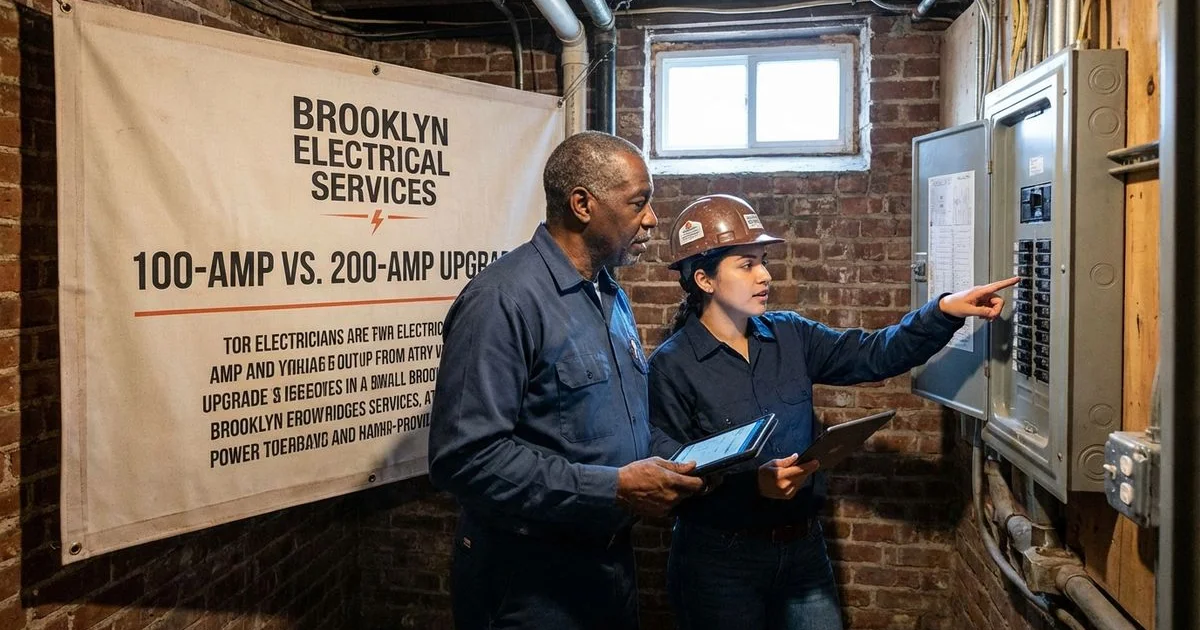
| 100A to 200A Upgrade | $4,500 - $7,500 | New panel, new meter pan, new riser cable, grounding update. | 1-2 Days + Permit Time |
| Underground Service | $8,000 - $12,000+ | Digging/trenching required. Heavy coordination with Con Ed. | 2-4 Weeks (variable) |
| Complex Retrofit | $15,000+ | Full service change + sub-panels or rewiring for multi-family homes. | 1 Month+ |
These figures include labor, materials, and standard Department of Buildings (DOB) filing fees.
Costs fluctuate based on whether you live in a detached home in Marine Park or a limestone rowhouse in Park Slope.
What Factors Affect the Cost
The price gap between a $4,000 job and an $8,000 job usually comes down to infrastructure and bureaucracy.
We analyze four main drivers that change the bottom line for Brooklyn homeowners.
Panel Brand and Component Quality
The metal box on your wall is the cheapest part of the equation.
A basic 200-amp load center from Siemens or Eaton might cost $250.
However, the breakers themselves drive the cost up significantly.
New NYC electrical codes require Arc Fault Circuit Interrupter (AFCI) breakers for most living areas.
Standard breakers cost roughly $6 to $10 each.
AFCI breakers cost between $50 and $80 each.
If your panel has 30 circuits, the difference in breaker cost alone is over $1,500.
We recommend sticking to “copper bus” panels like the Square D QO series for longevity, even though they cost slightly more than the aluminum alternatives.
Permit and Asbestos Filing (The “ACP-5”)
This is the factor that catches most homeowners off guard.
You cannot legally perform a service upgrade in NYC without a permit.
The DOB permit fee is calculated based on the estimated cost of the work, usually falling between $200 and $500.
There is another layer of paperwork unique to our city.
Before any permit is issued, you generally need an asbestos assessment.
This is known as an ACP-5 form.
A certified investigator must verify that the area where we are cutting into walls does not contain asbestos.
This form typically costs between $500 and $800 depending on the investigator you hire.
Con Edison Coordination
Upgrading from 100 amps to 200 amps almost always requires a heavier cable coming from the street.
We handle the technical request to Con Edison known as the “load letter.”
If your service comes from overhead lines (common in Flatbush or Bed-Stuy), the process is straightforward.
Con Edison crews will come out to cut and reconnect the power at the weatherhead.
If your service is underground (common in stricter historic districts or downtown), the cost jumps significantly.
Con Edison may charge fees to inspect the conduit or require you to dig a trench to lay new PVC pipe.
Existing Wiring Conditions
Your new panel is like a new heart.
It cannot function well if the arteries (your wires) are clogged.
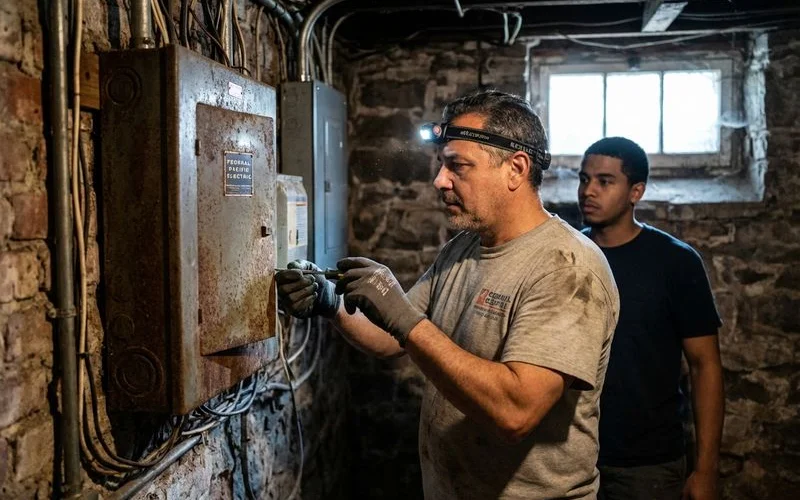
Older Brooklyn homes often have cloth-insulated wiring or armored cable (BX) that lacks a dedicated ground wire.
Common wiring issues that increase labor costs:
- Short wires: The existing wires in the wall are too short to reach the breakers in the new panel, requiring a junction box.
- Mixed neutrals: Older wiring sometimes shares neutral wires between circuits, which immediately trips modern AFCI breakers.
- Bonding issues: The water main ground (the safety wire attached to your water pipe) must be updated to meet current code.
Hidden Costs to Watch For
Estimates often look cheaper because they exclude the necessary finishing work.
We advise you to ask about these specific line items before signing any contract.
- Drywall and Plaster Repair: Electricians are not painters. Access holes cut to fish new wires through lath-and-plaster walls will need to be patched by a separate contractor.
- Grounding Upgrades: Code requires two ground rods driven into the earth or a verified connection to the incoming water main. If your water line is plastic (PEX), you need an alternative grounding method.
- Sub-Panel Requirements: If your main panel is in the basement but your kitchen is on the third floor, you might need a sub-panel on the upper level to meet code requirements for circuit access.
Is a Panel Upgrade Worth the Investment
You might view this as a grudge purchase.
Spending money on a metal box in the basement is less exciting than renovating a kitchen.
However, a service upgrade offers tangible financial returns beyond safety.
Consider these three value-adds:
- Insurance Savings: Many carriers offer a discount of 5% to 10% on premiums once you provide a “four-point inspection” showing a modern electrical system.
- Appliance Protection: Modern panels with whole-home surge protection (SPD) safeguard your computers and smart fridges from grid spikes.
- Resale Value: Savvy buyers in Brooklyn check the panel first. A 100-amp service is a red flag that signals expensive future work, while a 200-amp service is a major selling point.
Getting an Accurate Estimate
Online calculators can only give you a rough ballpark.
Your home’s specific layout and the distance from the Con Edison service point determine the real price.
We provide free on-site evaluations for Brooklyn homeowners considering a panel upgrade because we need to see the “guts” of the system to be accurate.
Our evaluation covers:
- Assessment of the service entrance cable condition.
- Load calculation based on your square footage and appliance list.
- Review of the grounding system.
- Check for physical obstructions that would complicate the install.
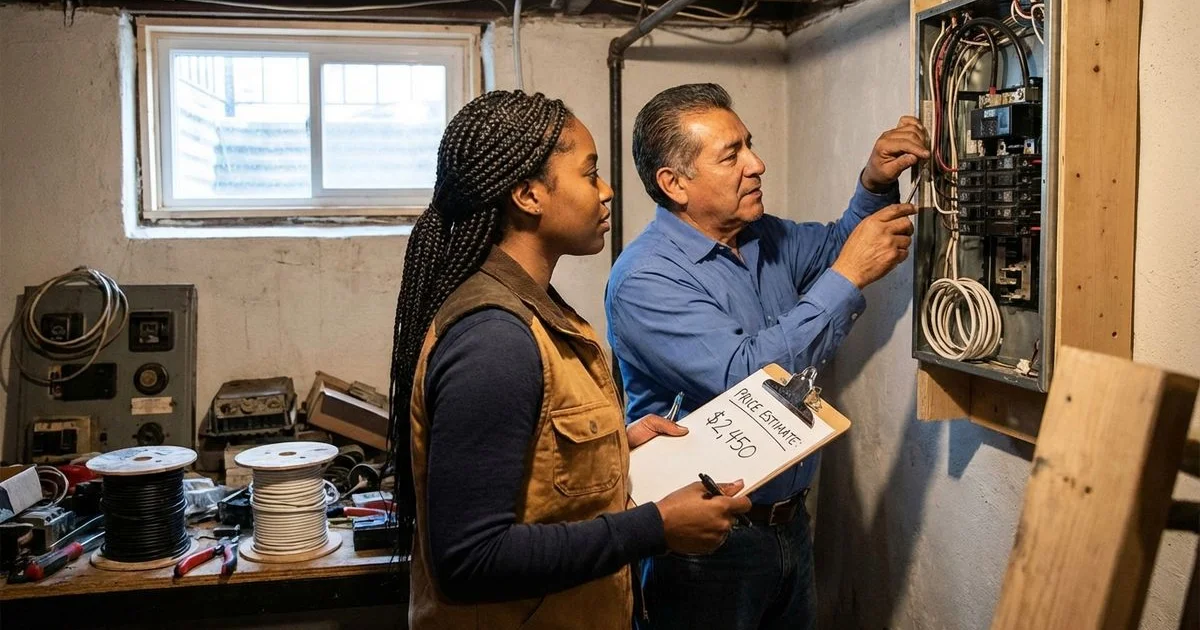
You will receive a detailed written proposal that separates labor, materials, and permit fees.
We believe in pricing that doesn’t change halfway through the job.
Related Service
Learn more about our panel upgrades service