You walk into a classic brownstone in Park Slope or Bed-Stuy and fall in love with the original molding.
Then the home inspection report comes back.
It flags “active knob-and-tube wiring” as a major safety hazard.
We see this scenario play out almost every week in the New York City real estate market.
Buyers often panic at the thought of opening up plaster walls, while sellers worry the deal will fall through.
The reality is manageable if you understand exactly what you are dealing with.
We are going to break down the specific fire risks associated with this 1900s technology and explain the exact process for replacing it without destroying your home’s character.
What Is Knob-and-Tube Wiring?
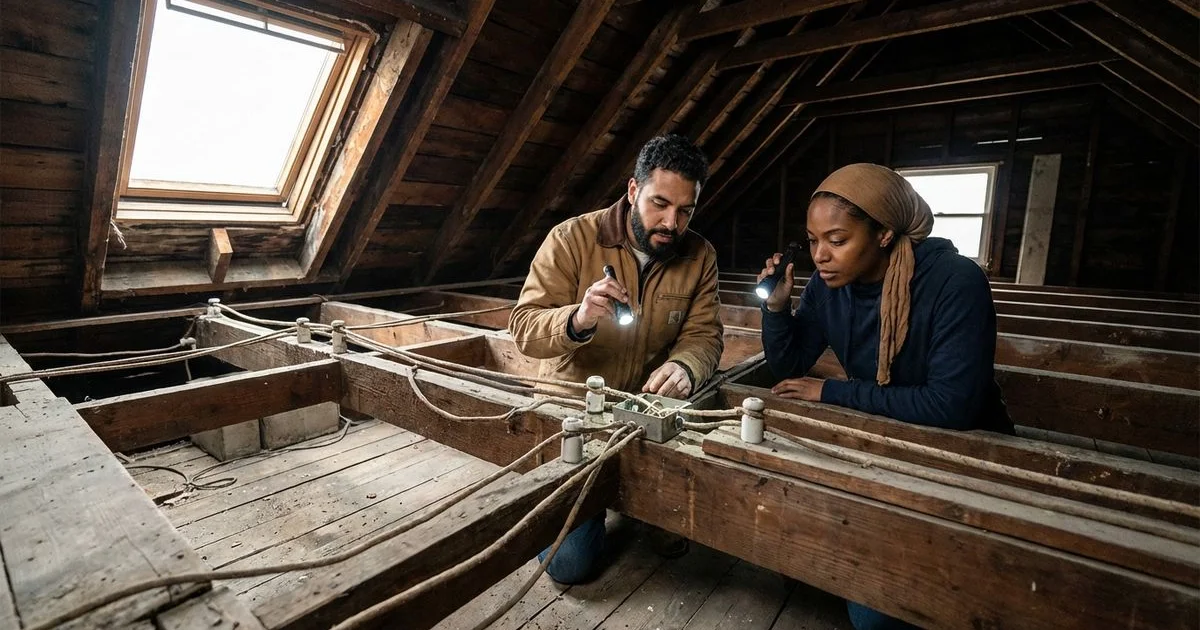
Knob-and-tube (K&T) was the standard method for electrical installation in American homes from roughly 1880 to the 1940s.
Brooklyn’s historic housing stock means this system is still active in thousands of rowhouses and prewar buildings across the borough.
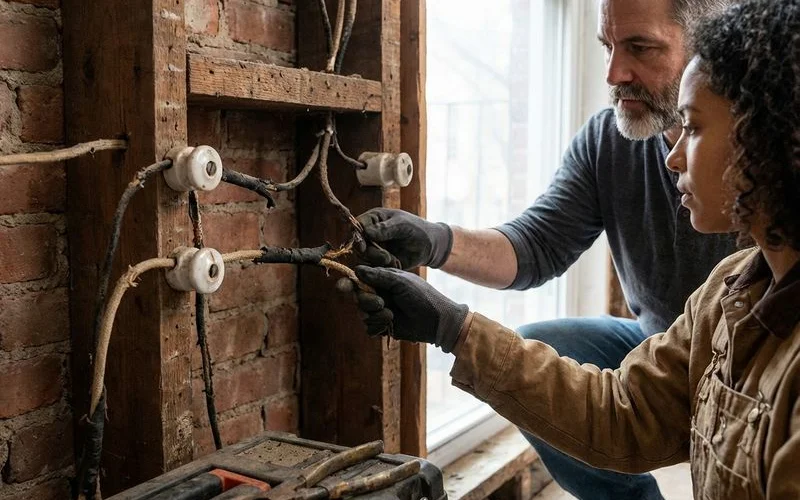
The system gets its name from two ceramic components.
Knobs: These white ceramic cylinders support the wire and keep it isolated from wood framing.
Tubes: These ceramic sleeves protect the wire as it passes through holes drilled in floor joists or wall studs.
Unlike modern electrical cable which bundles the hot, neutral, and ground wires together in a plastic sheath, K&T runs single copper conductors separately.
They float in the air cavities inside your walls.
The insulation is typically a rubberized cloth material that is treated with asphalt.
While this was innovative engineering in 1920, the electrical load of a modern home has drastically outpaced what these systems were built to handle.
Why Knob-and-Tube Is Dangerous in 2026
The danger is not necessarily that the wiring is old.
The danger comes from how the wiring interacts with modern building materials and usage habits.
We find that three specific factors turn this outdated system into a fire hazard.
The Insulation Breakdown
Time is the enemy of the rubberized cloth insulation used on these wires.
Heat and oxidation cause the rubber to become brittle and flake off over 80 to 100 years.
We frequently open junction boxes or walls and see bare copper wire exposed where the insulation has simply turned to dust.
This creates a high risk of arcing or short-circuiting against nails, pipes, or other wires inside the wall.
The Grounding Deficit
Knob-and-tube systems do not have a ground wire.
Modern appliances like computers, refrigerators, and washing machines rely on a ground wire to safely divert excess electricity during a surge or fault.
You might see three-prong outlets in an old home, but that does not mean they are grounded.
Many previous renovations involved swapping the outlet faceplate without updating the wiring behind it.
This leaves your expensive electronics vulnerable and increases the risk of shock.
The Thermal Trap
This is the most critical issue for energy-conscious homeowners.
Knob-and-tube wiring was designed to release heat into the open air space inside the wall cavity.
It requires that air circulation to stay cool.
When a homeowner blows cellulose or spray foam insulation into the walls to improve energy efficiency, they unknowingly trap that heat.
The National Electrical Code (NEC Article 394) specifically forbids enveloping knob-and-tube wiring in thermal insulation because the wires can overheat and ignite the surrounding building materials.
Comparing Old vs. New Standards
It helps to see the numbers side-by-side to understand the capacity gap.
| Feature | Vintage Knob-and-Tube | Modern NM (Romex) Cable |
|---|---|---|
| Grounding | No ground wire (2-wire system) | Includes ground wire (3-wire system) |
| Insulation | Rubber/Cloth (degrades over time) | Thermoplastic (highly durable) |
| Heat Dissipation | Requires open air space | Safe for insulated walls |
| Service Capacity | Often limited to 60 Amps | Standard is 100-200 Amps |
| Connections | Soldered and taped joints | Secure wire nuts or WAGO connectors |
How to Identify Knob-and-Tube in Your Home
You can often spot the tell-tale signs without opening up a wall.
If your Brooklyn property was built before 1950 and has not undergone a full gut renovation, you need to check these specific areas.
The Basement Ceiling: Look up at the exposed joists for white ceramic knobs or tubes with wires running through them.
The Attic: This is often the easiest place to spot undisturbed K&T wiring running along the floorboards.
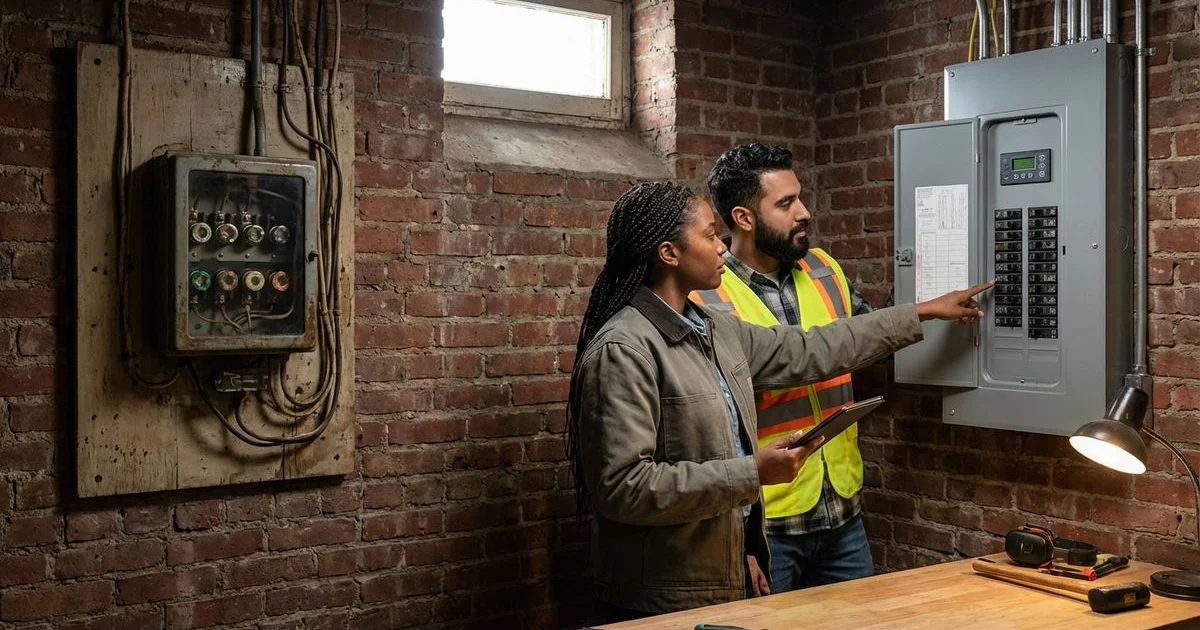
The Electrical Panel: An updated panel does not guarantee updated wiring. Sometimes new lines run from the panel to a junction box where they splice into the old knob-and-tube system.
Ungrounded Outlets: Two-prong outlets are a strong indicator of older wiring, though three-prong outlets can be deceptive.
Push-Button Switches: While some are modern reproductions, original push-button light switches often indicate original wiring behind the plaster.
Insurance and Code Implications in NYC
Insurance is often the trigger for a rewiring project.
Many major carriers will deny coverage or cancel existing policies if they discover active knob-and-tube wiring during a 4-point inspection.
We have seen carriers like Allstate and Travelers require removal within 30 to 60 days of closing on a new home.
The New York Property Insurance Underwriting Association (NYPIUA) creates a fallback option for some, but premiums are significantly higher.
NYC Electrical Code Requirements
The New York City Electrical Code does not technically mandate the removal of existing, functional knob-and-tube wiring just because it is there.
It does strictly prohibit extending it.
Rule 1: You cannot add new outlets or lights to an existing K&T circuit.
Rule 2: You cannot insulate walls containing active K&T wiring.
Rule 3: Any major renovation that opens the walls usually triggers a requirement to bring that specific area up to current code standards.
Solutions for Brooklyn Homeowners
The only permanent fix is a rewire.
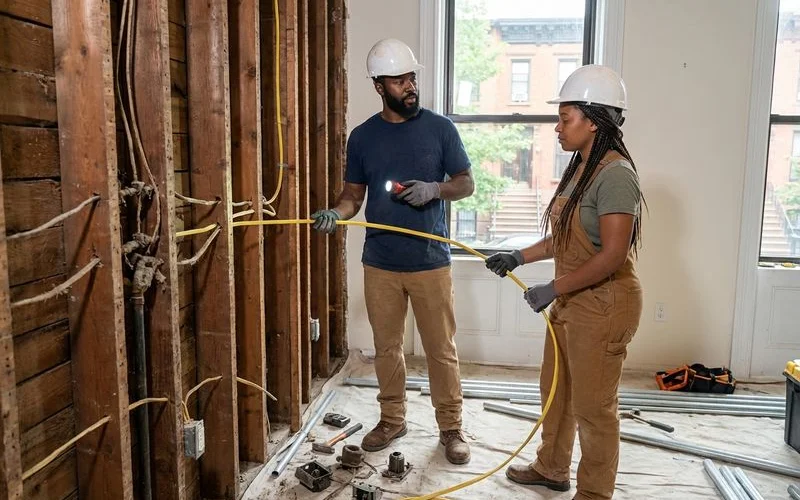
This involves decommissioning the old copper and running modern non-metallic (NM) cable throughout the home.
We approach this process in two potential ways depending on your budget and timeline.
Option A: The Full Rewire
This is the most cost-effective approach in the long run.
Replacing everything at once allows the electricians to work efficiently from the top floor down to the panel.
A typical 2,500-square-foot brownstone rewire in 2026 can range from $20,000 to over $45,000 depending on access and complexity.
This price usually includes a service upgrade to 200 amps, new cabling, hardwired smoke detectors, and proper grounding for all outlets.
Option B: The Phased Approach
You can prioritize safety by tackling the most dangerous areas first if a full rewire is not financially feasible immediately.
Phase 1: Replace wiring in the basement and attic where it is exposed and vulnerable to physical damage.
Phase 2: Rewire the kitchen and laundry room circuits where appliance loads are heaviest.
Phase 3: Address bedrooms and living areas.
This method spreads the cost out but will likely be more expensive in total due to repeated setup times and permit fees.
Working With Historic Architecture
The fear of destroying original plaster is the main reason homeowners delay this work.
An experienced team knows that a sledgehammer is rarely the right tool for a brownstone.
We use specific “fishing” techniques to minimize damage to walls and ceilings.
MagnaPull Systems: We use magnetic wire-pulling tools to guide cables behind walls without cutting large channels.
Flex Bits: Long, flexible drill bits allow us to bore through internal fire blocking from a small opening the size of an outlet box.
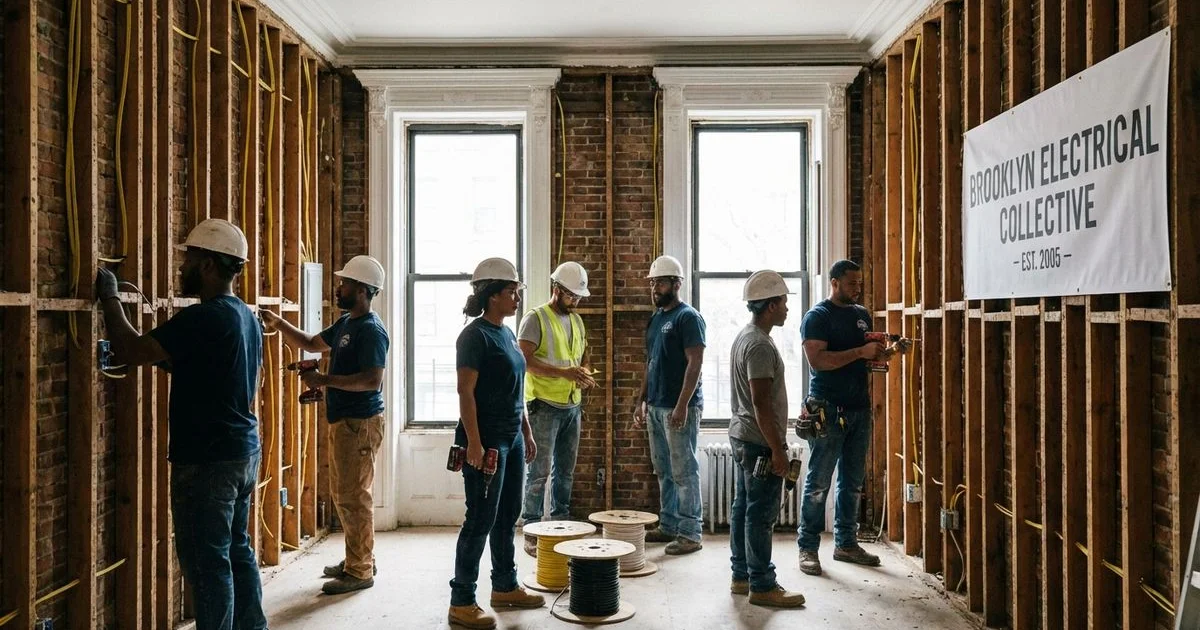
Strategic Cuts: When we do need to open a wall, we cut small, clean access points that a plasterer can patch easily, rather than tearing down whole sheets of lath and plaster.
Preserving your crown molding and medallions is a priority during the electrical design phase.
Take the First Step
Your safety margin decreases with every year this insulation continues to degrade.
The most practical move is to get a clear picture of what is happening inside your walls right now.
We recommend scheduling a dedicated electrical audit rather than relying on a general home inspector.
Our team will trace your circuits, evaluate the condition of the insulation, and provide a transparent quote for rewiring your Brooklyn home up to code.
You can protect your investment and your family by addressing this before it becomes an emergency.
Contact us today to assess your wiring and build a plan that respects your home’s history.
Related Service
Learn more about our wiring rewiring service