If you live in Brooklyn, you already know that energy costs are a constant conversation starter.
Con Edison rates fluctuate, but they consistently rank among the highest in the country.
We see the impact of these costs on monthly bills every time we visit a client’s home.
One of the simplest upgrades you can make is switching from traditional incandescent or CFL bulbs to modern LED lighting.
But is the switch worth the effort for a few dollars?
Let us look at the actual math and the specific challenges Brooklyn homeowners face.
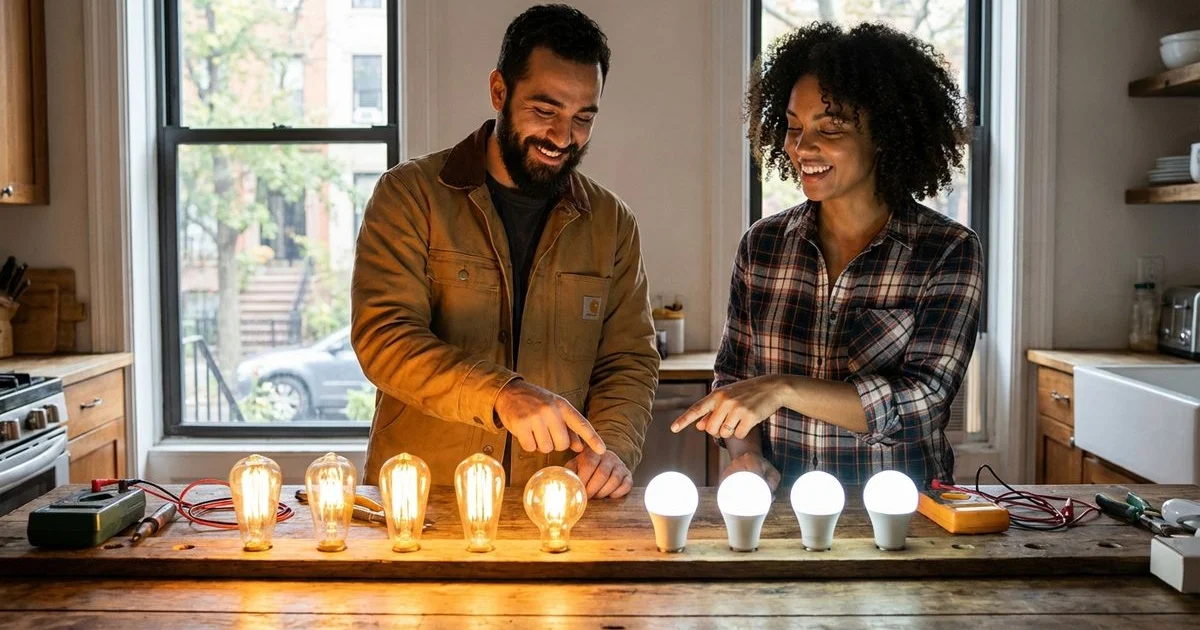
Understanding the Basics: LED vs Incandescent vs CFL
Traditional incandescent bulbs defined home lighting for over a century.
They operate by heating a tungsten filament until it glows, a process that is incredibly inefficient.
Roughly 90 percent of the energy an incandescent bulb consumes turns into heat rather than light.
This heat buildup can actually damage brittle wiring insulation in older Brooklyn fixtures over time.
CFL (compact fluorescent) bulbs were the first mainstream attempt to fix this efficiency problem.
These spiral-shaped bulbs use about 13 to 15 watts to match the output of a 60-watt incandescent.
However, they come with significant downsides.
Most CFLs contain small amounts of mercury, requiring special handling during disposal.
They also struggle in the cold, often taking several minutes to reach full brightness in a drafty entryway or vestibule.
LED bulbs have solved these engineering problems.
A modern LED uses just 8 to 10 watts to produce the same 800 lumens of brightness.
They contain no hazardous materials and light up instantly, even in sub-zero temperatures.
The Real Cost Comparison for Brooklyn Homes
We calculated the numbers based on a typical Brooklyn row house setup.
Imagine a home with 30 light fixtures running for an average of 5 hours per day.
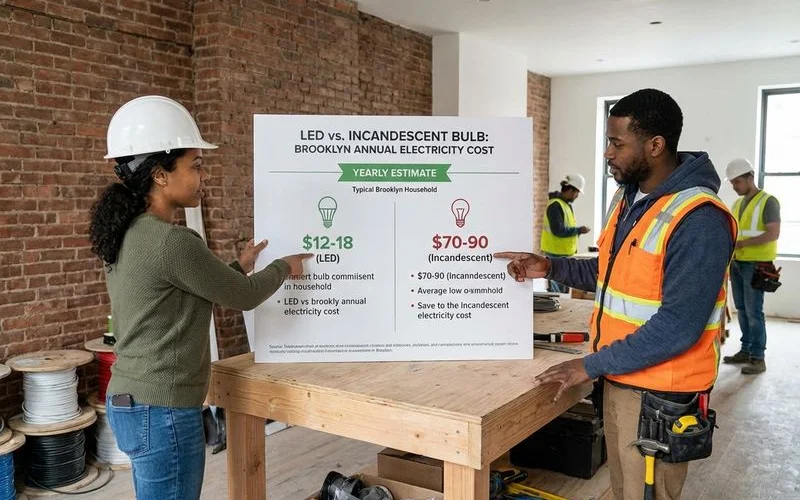
Using a conservative average residential rate of $0.33 per kWh, the difference in annual spending is stark.
Annual Lighting Costs by Bulb Type
| Bulb Type | Watts Used | Annual kWh | Annual Cost (approx.) |
|---|---|---|---|
| Incandescent | 60W | 3,285 | $1,084 |
| CFL | 14W | 766 | $253 |
| LED | 9W | 493 | $163 |
Incandescent bulbs are a financial drain.
30 bulbs running for 5 hours a day consume over 3,000 kWh annually.
That translates to more than $1,000 a year just to keep the lights on.
CFL bulbs drop that cost significantly to around $253.
LED bulbs offer the deepest savings.
Running those same fixtures with LEDs costs only about $163 per year.
Switching from incandescent to LED saves a single household approximately $921 annually.
Even upgrading from CFL to LED keeps nearly $90 extra in your pocket every year.
Payback Period and Long-Term Value
The upfront cost of LEDs has dropped dramatically in recent years.
A quality, dimmable LED bulb now costs between $3 and $5.
For a 30-fixture home, the total material investment sits between $90 and $150.
With annual savings of over $900, your savings will cover the cost of the bulbs in less than two months.
We also have to consider the lifespan of the hardware.
Longevity Comparison:
- Incandescent: ~1,000 to 2,000 hours
- CFL: ~8,000 to 10,000 hours
- LED: ~25,000 to 50,000 hours
An LED bulb rated for 25,000 hours will last roughly 13.7 years if used 5 hours a day.
In that same period, you would need to buy and replace an incandescent bulb about 23 times.
For homeowners with high ceilings or difficult-to-reach chandeliers, simply not having to climb a ladder every few months is a benefit worth paying for.
Beyond the Bulb: Whole-Home Lighting Upgrades
Swapping bulbs is an excellent first step.
However, Brooklyn homeowners who invest in comprehensive lighting installations see benefits that go beyond the electric bill.
Modern fixtures allow for better heat management and more sophisticated design control.

Professional installation addresses the unique quirks of local architecture.
Many pre-war homes in Brooklyn still rely on older wiring systems that lack a neutral wire in the switch box.
This often causes modern LEDs to flicker, buzz, or glow faintly when turned off if they are paired with standard dimmers.
We ensure your new fixtures are wired correctly and matched with the right controls, such as the Lutron CL series or ELV dimmers, to prevent these common annoyances.
Why Professional Installation Matters
- Dimmer Compatibility: Ensuring switches handle the low-voltage load without buzzing.
- Heat Safety: preventing overheating in enclosed fixtures or insulation.
- Consistent Color: Matching the Color Rendering Index (CRI) across all rooms.
- Wiring Integrity: Assessing cloth-wrapped or aluminum wiring often found in older renovations.
Smart LED Options for Brooklyn Apartments
Smart lighting has moved from a novelty to a practical tool for energy management.
Connected bulbs allow you to control your lighting via smartphone or voice commands.
We recommend systems that offer “geofencing” capabilities.
This feature automatically turns off lights when your phone leaves the house, ensuring you never pay for electricity you aren’t using.
Brooklyn residents often report an extra 10 to 15 percent savings after automating their lighting schedules.
Tunable white lighting is another major advantage of smart systems.
You can program these bulbs to shift color temperature throughout the day to match your circadian rhythm.
Recommended Color Temperatures:
- Daytime (Work): 3500K - 4000K (Cool White) for focus.
- Evening (Relax): 2700K (Warm White) to mimic traditional incandescents.
- Late Night: 2200K (Amber) for a cozy, candlelight atmosphere.
Rebates and Incentives Available in Brooklyn
New York State actively encourages the shift to energy-efficient technology.
While instant point-of-sale rebates for bulbs fluctuate, larger programs remain available for substantial upgrades.
The NYSERDA residential program often provides incentives for installing Energy Star-certified fixtures.
Con Edison’s Marketplace is another resource where customers can find discounted products directly.
We always check for active incentives before starting a project to ensure our clients get the best possible deal.
If you are planning a gut renovation, combining lighting with other efficiency upgrades might qualify you for the EmPower New York program.
This program offers significant support for income-eligible residents looking to lower their carbon footprint.
A Note on Disposal
New York City has strict rules regarding the disposal of CFL bulbs due to their mercury content.
You cannot throw them in the regular trash.
They must be taken to a DSNY Special Waste Drop-Off Site or a participating retailer.
LEDs do not have this restriction, making them far easier to manage at the end of their life.
Making the Switch: Key Considerations
Before you buy a box of bulbs, you need to check a few technical details.
Color temperature is the most visible factor.
Most Brooklyn brownstones feature warm wood tones and brick, which look best under 2700K “Warm White” light.
Putting a cool 5000K “Daylight” bulb in a living room can make the space feel like a hospital waiting room.
We also advise checking your fixture ratings.
Enclosed fixtures (like flush mounts or globes) trap heat, which can shorten the life of a standard LED bulb.
You should look for LEDs specifically rated for “enclosed fixtures” to ensure they last their full 25,000 hours.
For hardwired fixtures, consulting a professional ensures you don’t run into voltage issues.
Our team at Brooklyn Electrical Experts assists homeowners in selecting the right integrated LED fixtures that eliminate the need for bulb changes entirely.
The Bottom Line
Switching to LED lighting is one of the highest-return investments you can make for your home.
The numbers don’t lie.
With annual savings approaching $1,000 for a typical home, the upgrade pays for itself in weeks.
You also gain the benefit of superior light quality and significantly less maintenance.
Whether you start with a simple bulb swap or invest in a full lighting installation redesign, the reduction in your Con Edison bill starts immediately.
If you need help assessing your current wiring or planning a lighting upgrade, we are here to help you get it right.
Related Service
Learn more about our lighting installation service